Name Your Standards - 3.3 MSLD 500
Hello World,
For this blog assignment we are going to discuss a few topics below around Universal Standards. I will provide on example based on the literature of our class from Dr. Paul, and a few personal examples of how I have developed my clarity/communication over the years. We will examine how I acquired these standards, how they altered over the years, if others have similar standards, and how adhering to these standards has impacted relationships in my life.
A common universal standard is the practice of Clarity (Paul, 2020). One has to be able to convey a message in a clear fashion, so the audience is able to receive the message. As a student pilot with the United States Navy we were trained to have the highest form of communication clarity on the radio comms. We were told we were in the best training pipeline in the World, we were told to THINK before we key the microphone and communicate externally from the plane, this was a part of all of our grading sheets, and I can vividly recall rehearsing what I was going to say prior to responding back to air traffic control (ATC).
I am not a perfectionist by trade, but the training pipeline was so intense I increased my standard of communication and learned how to slow down my thought process and to logically break down a formulated thought prior to saying the words externally. This enabled me to pass my flight, and more importantly help communicate to ATC what my intension where such as informing them how long I would be in the airport, how many practice landings I wanted, how much fuel we wanted to order upon landing, and what I needed from them to help me plan accordingly.
What I did not anticipate through the form of having a high standard of slow thought prior to speaking was the impact this would have on my personal relationships. When people ask me questions, I am constantly thinking of the words I want to say prior to repeating them back. My Father expressed how I sound more robotic, and not as fluid when we talk, and my I now ask my wife to repeat back items as a way to ensure she understood what I am saying because we are taught to repeat back instructions in flight. Initially in flight training this was a hard item to separate in my mind, I wanted to keep practicing this standard of thought because this was needed for me to pass, but I could sense the negative implications this was having on my ability to speak without a regulator, and how this made me appear different.
As I gathered more experience in the aircraft, my ability to inform ATC of my desires became more automatic. I did not have to think as much to express myself in a clear fashion. As this transformation occurred, I was able to relax a bit more on the phone with Family and began to appear more authentic. My brain stills processes what I want to say, but this reflex is in a shorter time span. I feel like a better communicator because of this experience.
Many of my Friends are in the Military, and across all aircraft platforms we have to be great communicators to make sure we are safe. Many of my friends do have the same level of communication standards, but this is due to our training. When I chat, and have conversations with cousins, and friends their communication clarity efforts differ from person to person. I find myself gravitating towards those who are able to be precise and speak with clarity more than others.
_
Take a look at the images below as we wrap up this blog.
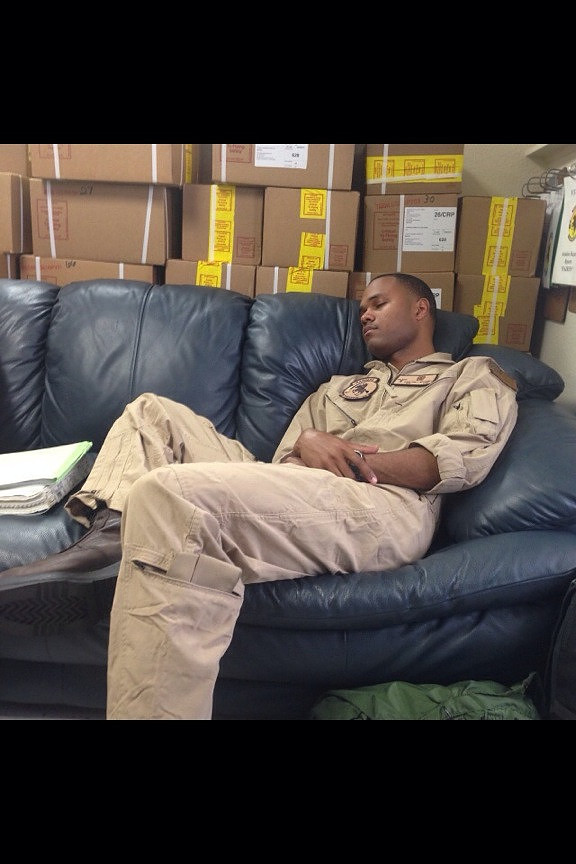
One is a photo with me sleeping in the briefing room before a flight. This is what flight school in the Navy does to you. You study so hard, that you are capable of sleeping at any moment. I recall dreaming about the flight before we flew. The amount of effort I put in to learn how to speak on the radio altered my personality with how I communicate with others today.
The second is a photo of aerobatics formation flying. Without clear communication we could not accomplish these levels of detailed flying. I think this solidifies why the Navy has such a high standard, and how we all acknowledge the art of clear understandable communication with clarity, and precision. The stakes are normally not this high, but this helps those understand the principles of clarity.


References:
Paul, R., Elder, L. (2020). The miniature guide to critical thinking. The Rowman & Littlefield publishing group, Inc. 8E, 19-22
